How to disagree politely on LinkedIn (and earn respect for it)
October 15, 2026 · 7 min read
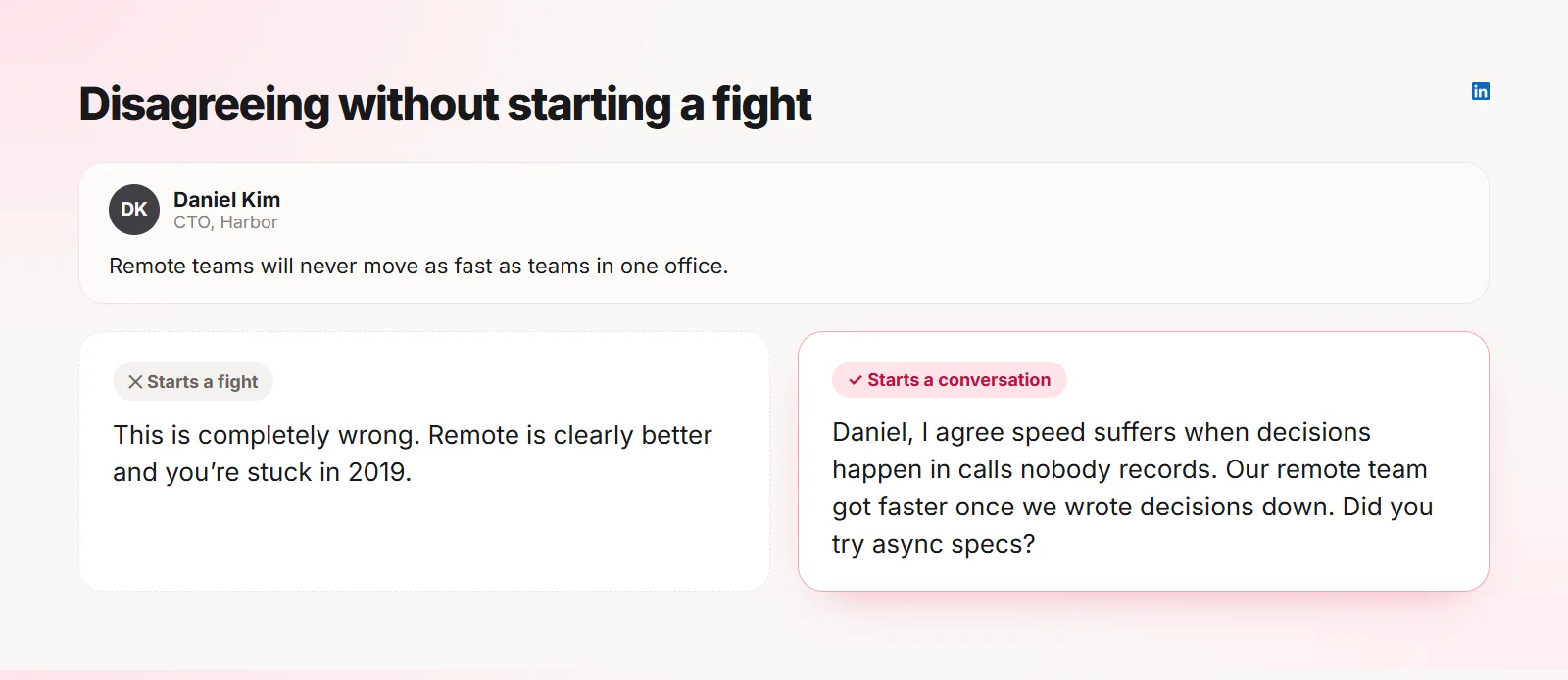
Agreeing is easy and forgettable. A thoughtful disagreement is one of the most memorable comments you can leave, as long as it does not turn into an argument. Done well, it shows you think for yourself, and the author often respects it more than another "Great post".
Why respectful disagreement works
Most comments agree, so a different view naturally gets attention. If it is calm and specific, readers see someone who thinks, not someone who wants a fight.
Authors also tend to reply to good disagreements, because they give them something to respond to. That reply puts your comment higher in the conversation.
See the difference
The four steps
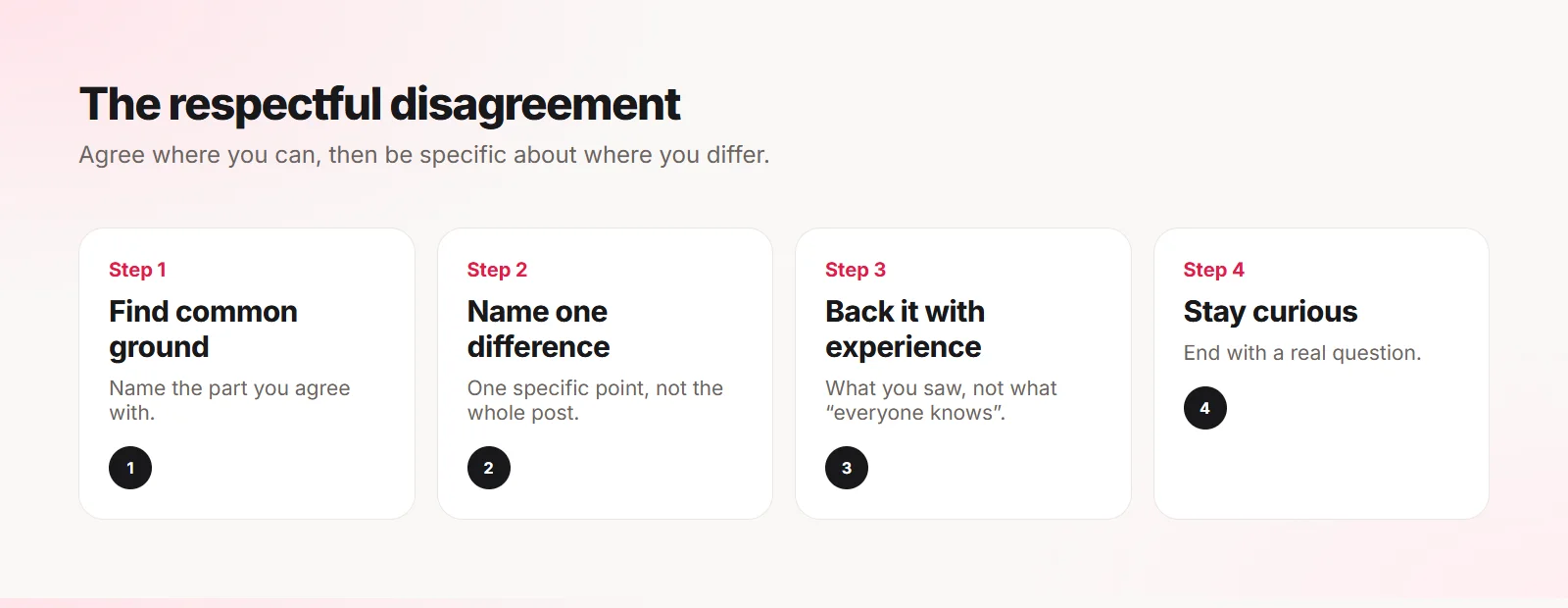
- Find common ground: name the part you agree with, honestly.
- Name one difference: one specific point, not the whole post.
- Back it with experience: what you saw, not what "everyone knows".
- Stay curious: end with a question you actually want answered.
Phrases that keep it calm
- "I agree with X, but in our case..."
- "I have seen the opposite happen when..."
- "I wonder if this depends on..."
- "Curious if you tried..."
- "That matches what I saw until..."
Phrases that start fights
- "This is wrong."
- "Nobody actually believes this."
- "Clearly you have never..."
- "Ok boomer" or any version of it
- Sarcasm, which reads much harsher in text
Disagree with ideas, not people
Talk about the claim, not the author. "Remote teams can be fast" is a discussion. "You do not understand remote work" is an attack, even if you did not mean it that way.
If the post is personal, like a story about someone’s burnout or a layoff, it is usually better not to argue at all.
Know when to stop
If the author replies and you still disagree, one more calm reply is fine. After that, thank them for the discussion and move on. Long back-and-forth threads rarely change minds and often look worse for both sides.
In Quiplos, the "Disagree respectfully" intent writes a respectful counterpoint from the post and the thread, in your own style. You can soften or sharpen it before you post.
Frequently asked questions
Can disagreeing on LinkedIn hurt my career?
A rude comment can. A calm, specific and respectful one usually does the opposite, because it shows independent thinking.
Should I disagree with a potential employer’s post?
You can, carefully. Keep it constructive and curious, and make sure it is a point you genuinely care about.
What if the author gets defensive?
Stay calm, thank them, and step away. You do not need the last word.
Quiplos learns your style and writes three replies under any post on X and LinkedIn. You always pick, edit and post.
Try Quiplos free